Helsinki-Stockholm Ferry - seals
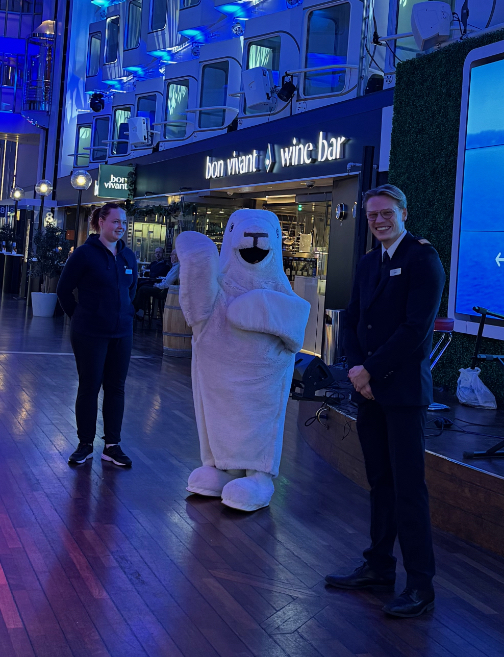
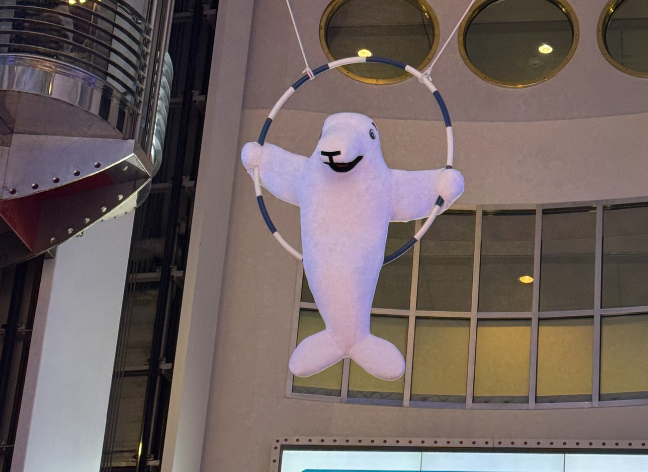
The smiling white seal welcomed us onto the ferry heading to Stockholm from Helsinki. It was fluffy, standing on its tail next to a smiling member of the Silja Line crew. Genderless and silent, of course: seals don't talk. I wondered if it was very hot for the person in that costume, but I didn't ask. There was another seal swinging on a hoop above the ship's promenade. That one was a stuffed toy, no person in it. There were similar stuffed white seals for sale in a shop in the Promenade. It's the mascot of the ferry company.
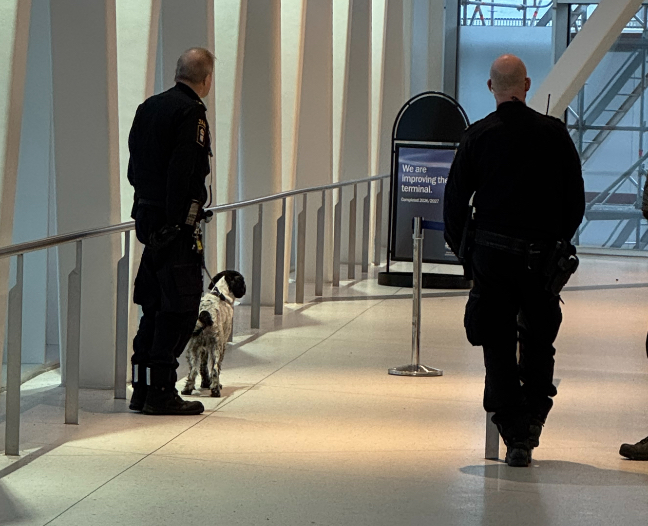
A single seagull welcomed us to Stockholm the next day as we docked, along with a working dog, sniffing for something suspicious as the passengers walked passed it. Those dogs always seem to be distracted until they find what they're looking for, at which point their laser focus is unmistakable.
Stockholm insects, lion, fish, fox, crow, dragon
We walked to the Gärdet metro station in Stockholm through slush and snow. The final 400 meters had no direction signs; perhaps they relied on us passengers having smart phones or following each other.
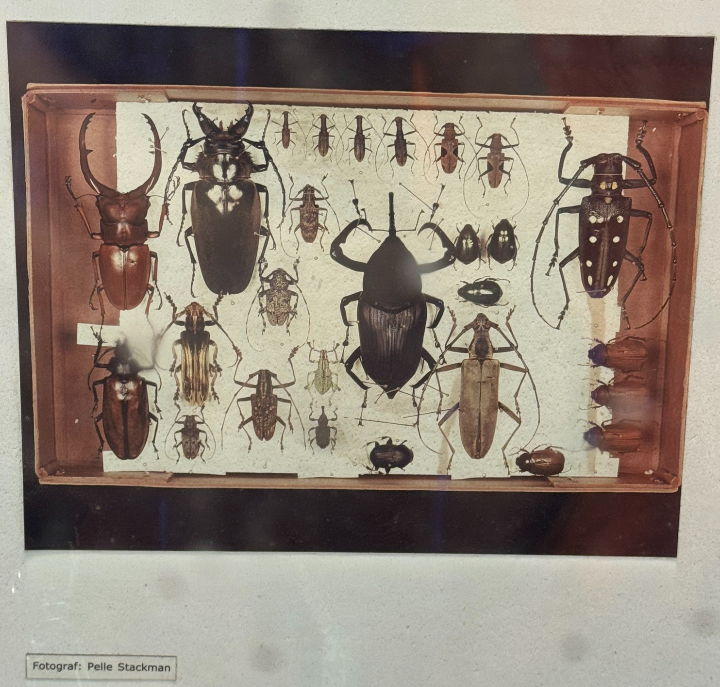
The metro station included an exhibition of insect art by Carl Axel Pehrson, which made a haunting, and beautiful, impression there in the underground. Most of the pieces emulated those displays of insects in old style natural history museums: the animals were pinned to a piece of cardboard in some kind of specific order, classified and catalogued. Linneaus would be proud.
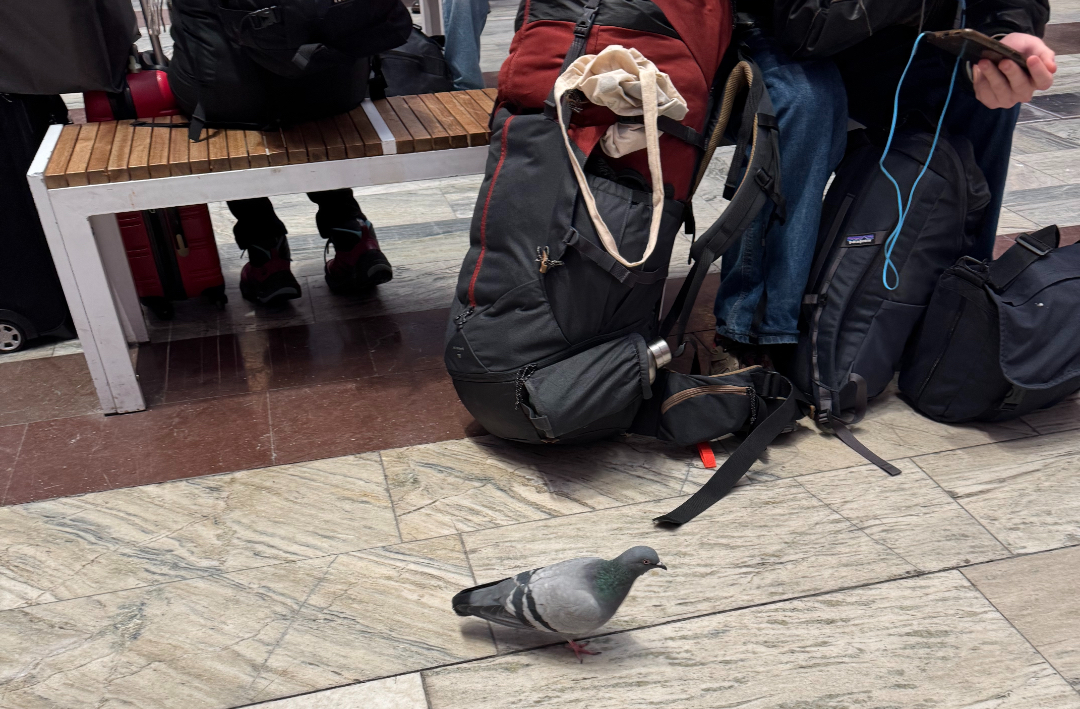
Stockholm Central railway station is very grand, and had some remaining signs of the Christmas season still visible. The pigeons pottered around, as they do in all train stations around Europe I suppose; there were a few pet dogs, mostly looking bored.
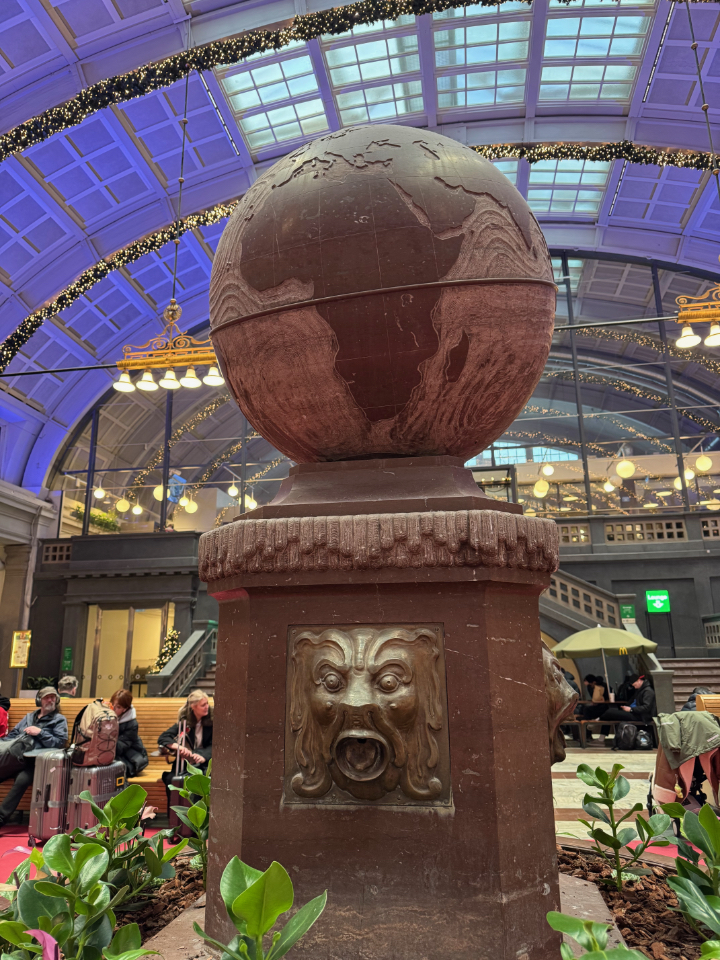
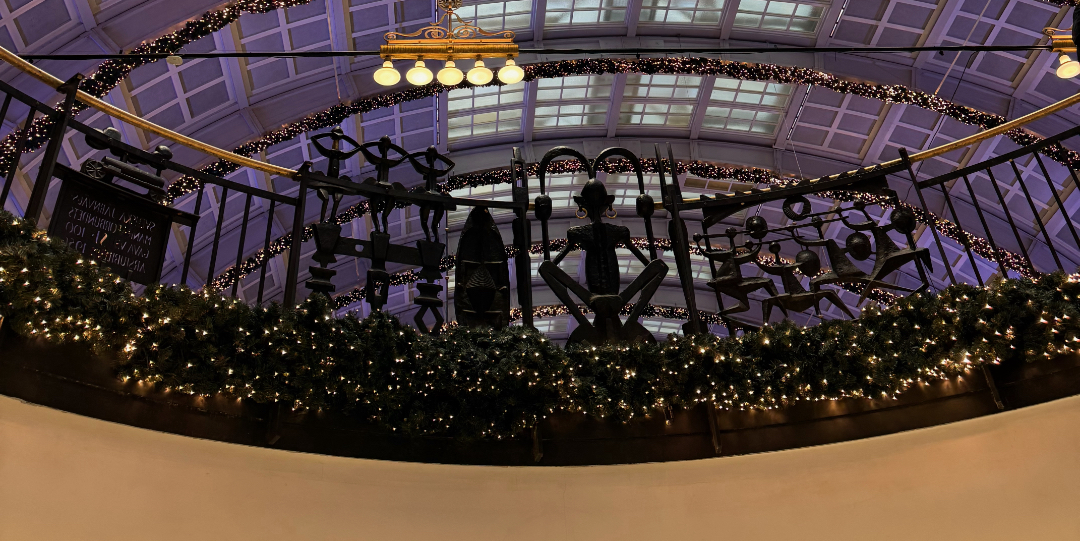
The station has an ornate drinking fountain created in 1927 by Ansgar Almquist, featuring a red limestone globe, and is surrounded by fish, frogs and lion mascaron. There was no water anymore. Instead, there were potted plants, presumably in the basin where the water used to pour. Combined with the ornate iron railings nearby that feature exotic looking people, it created a distinctly colonial feeling somehow.
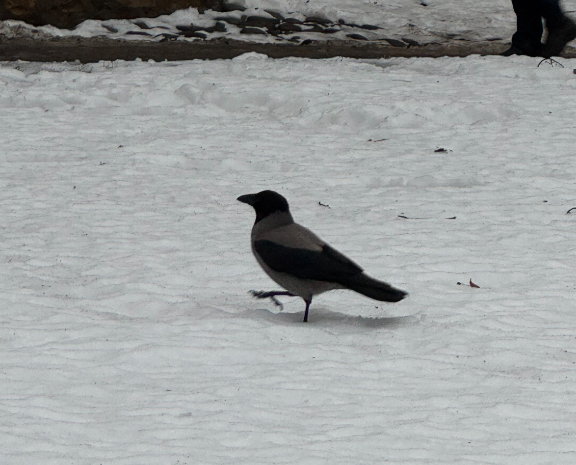
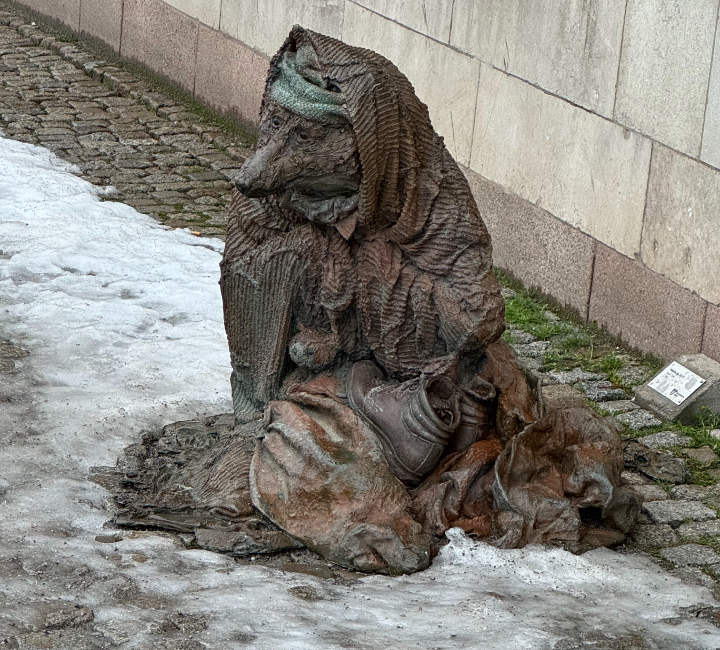
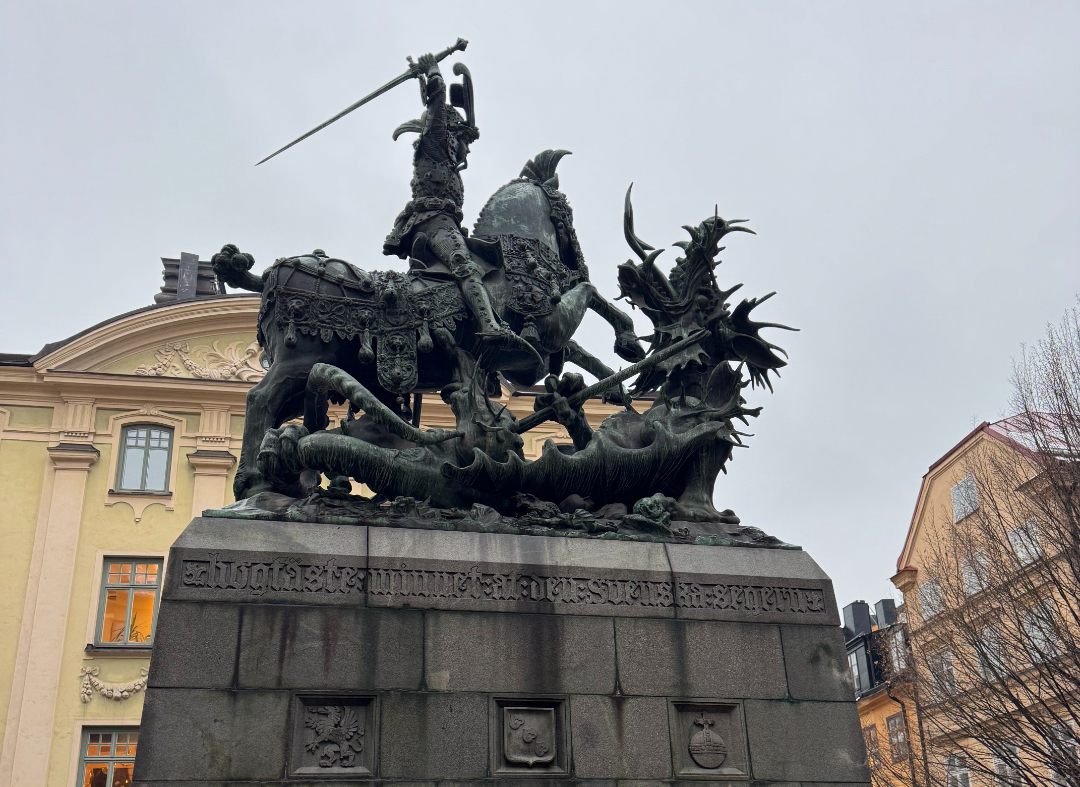
We went walking in Stockholm for a while, passing a crow investigating the snow around a church, and we passed a statue of a homeless fox huddled under blankets, sitting outside the Swedish Prime Minister's office ("Rag and Bone," Laura Ford, 2008). A much grittier, or perhaps just more contemporary, commentary than the 1927 globe drinking fountain. It also contrasted with a replica of St George slaying the Dragon built in 1912 to celebrate the Battle of Brunkeburg, which involved a victory of Swedes over Danes in 1471. Animal depictions are changing.
After lunch, we went back to the station to catch a train headed for Berlin. We made use of the public toilets, which contained a video of a fish tank in it near the basins: fish swimming around in a tank. But it was a video, not a real tank. That reminded me of how digitised the world is these days. We bought a salad from a shop in the station to eat on the train, but we could only order our own mix of greens from a computer screen, not from a person. The person who took our payment apologised.
This experience reminded me how different this trip was from flying: the distances feel like distances; the places feel like places, not global shopping warehouses. It is nothing at all like the internet, unlike many airports these days. It was slightly stunning how much more stimulating it was than flying or sitting in front of a computer.
German countryside, Berlin, seagulls
The temperatures were turning colder as we made our way to Berlin. Many fields in Germany - huge fields, mile after mile, were dotted with mole hills. There were also deer and occasional bird watching and hunting platforms, as well as occasional cows, sheep, horses. No pigs, not outside, anyway. A large flock of swans along one river bank near Göttingen caught my eye. I wondered why there were so many.
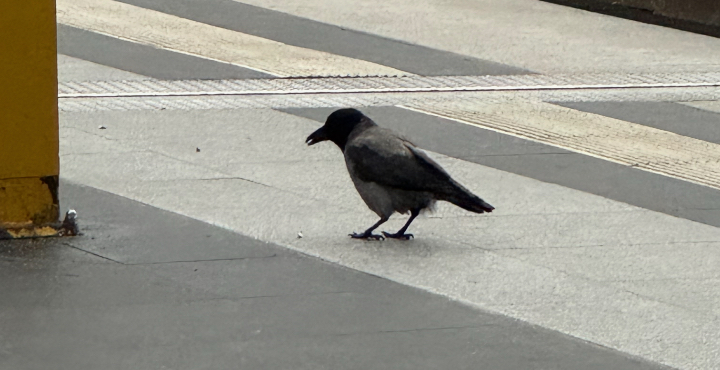
We arrived in Berlin, and we were greeted by a hooded crow. Berlin also has seagulls - odd, since the city is landlocked. It turns out the gulls have been arriving in European cities since the 1970s, both because coastal habitats have been reduced, and because cities make nice places for seagulls. They like the flat nesting spots on top of buildings and the easily available food all year round. Tuija suggested seagull habitats might be now somewhere near McDonalds.
Paris, lions, tigers, parakeets, dogs, ponies, more lions, ostriches, deer, dolphin
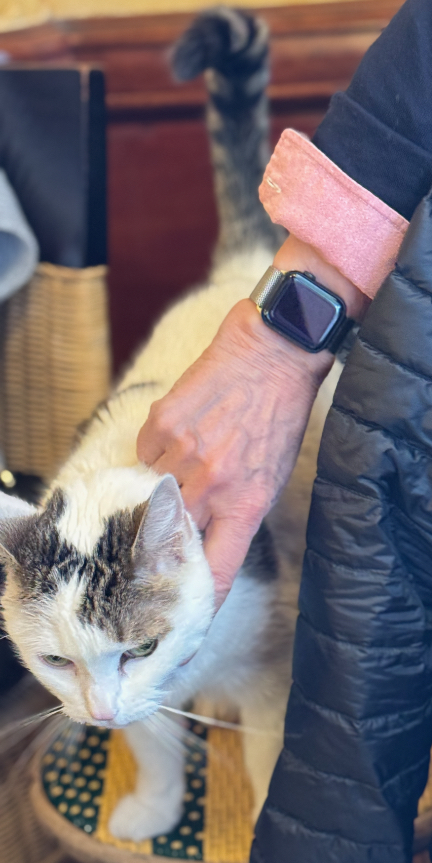
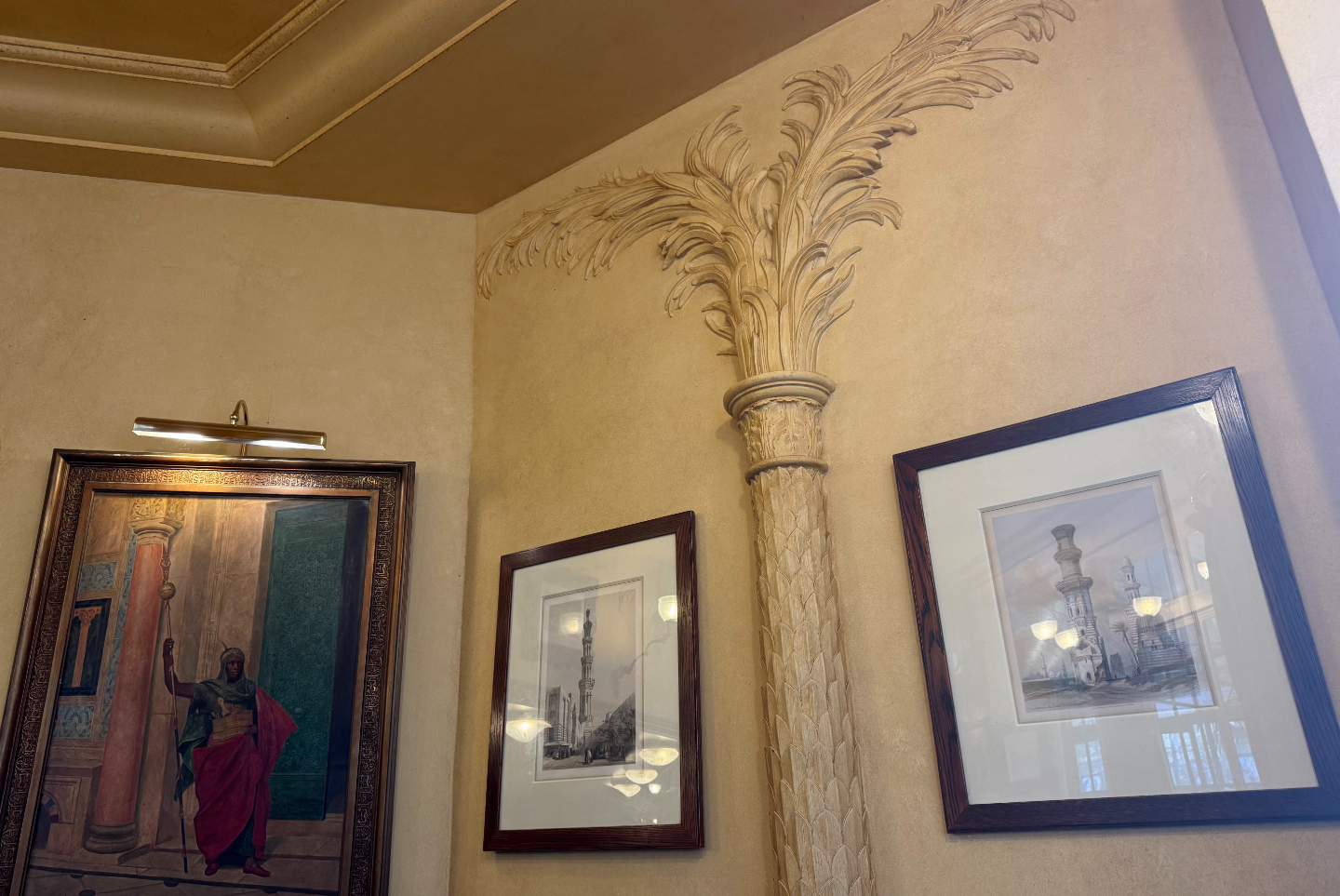
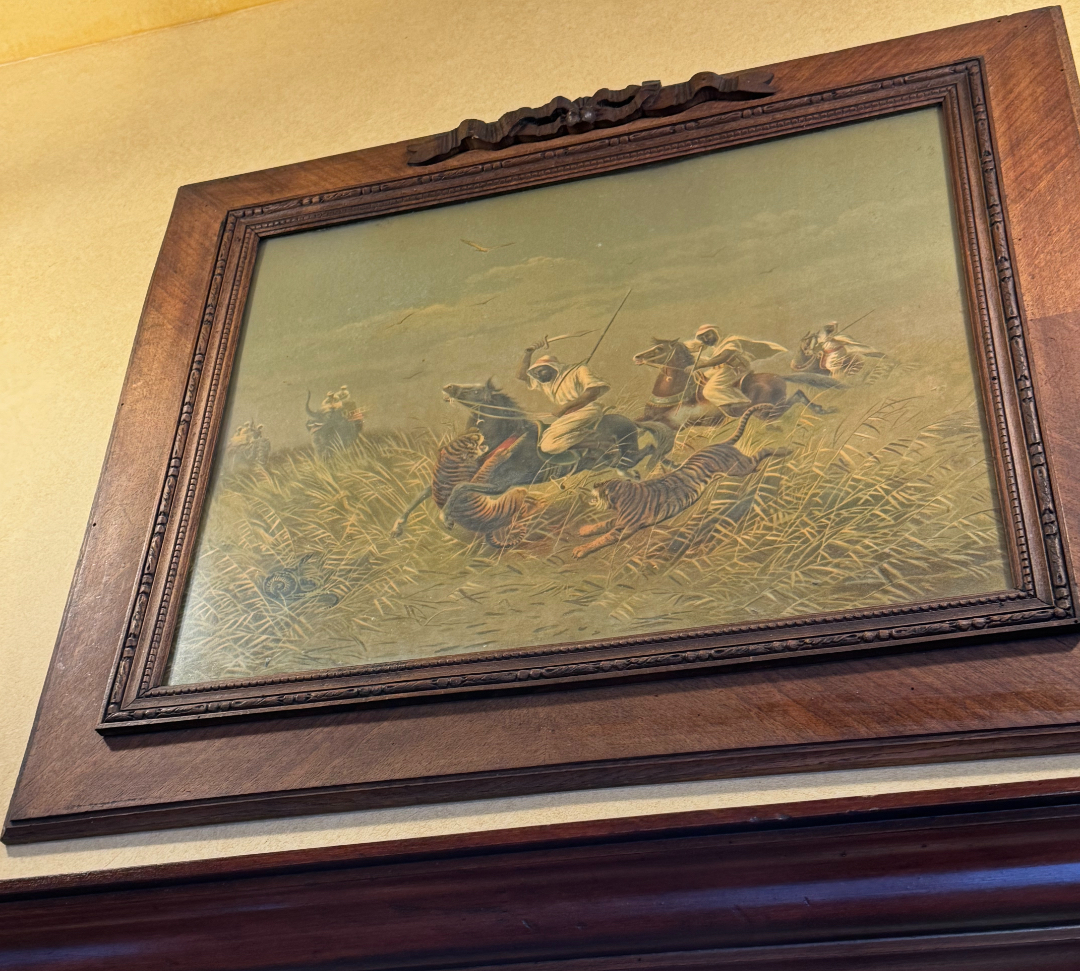
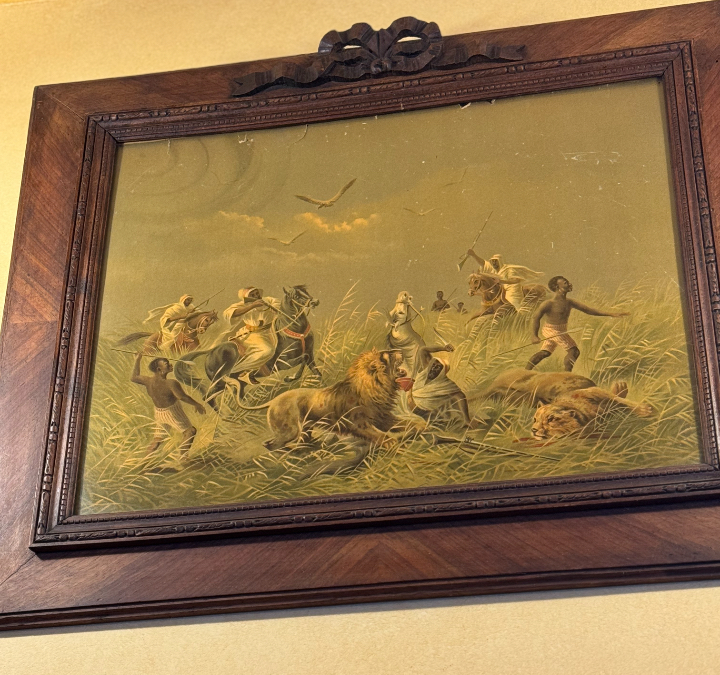
From Berlin, we went on to Paris, where we stayed the night. We had breakfast at Cafe Rostand near Luxembourg Gardens, which has a resident cat, popular with customers. The cafe has striking early 20th century Art Deco style, with stucco palm trees embossed on its yellow walls, dark wood panelling, as well as sketches and drawings on the walls from French colonial Africa. The sketches included one of people on horses hunting tigers and another of people both on horses and on foot hunting lions. Or perhaps it is the tigers and lions hunting the people, I'm not quite sure.
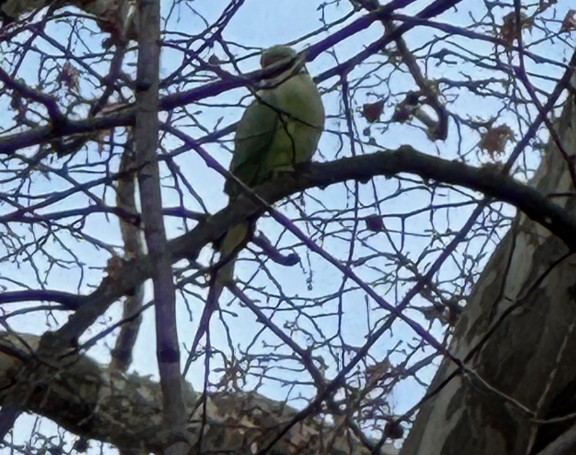
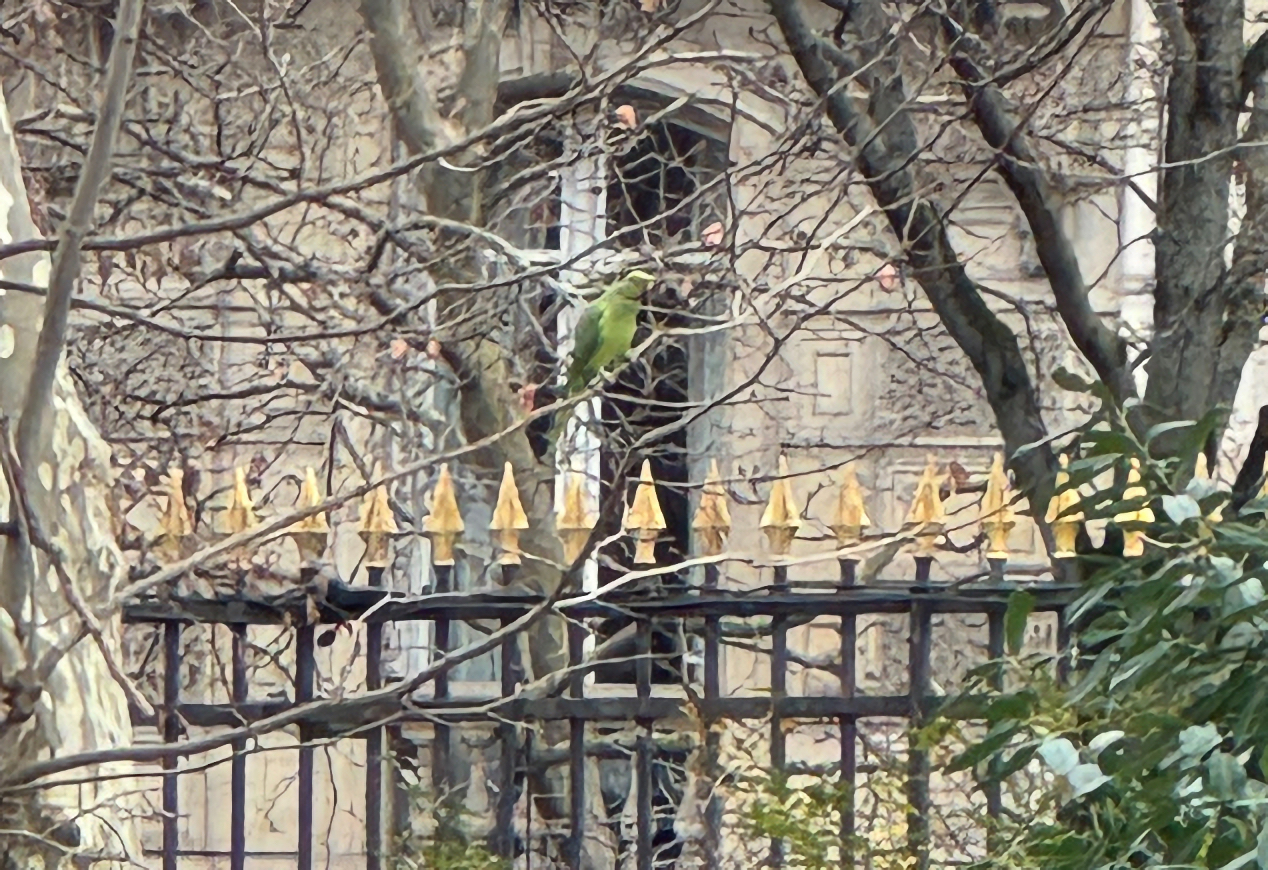
Luxembourg Gardens has a large population of parakeets in the huge plain trees around the Michaelangelo fountain and monument. They fly fast, swooping, stopping, screeching, swooping again, then sitting in the branches, interspersed with the odd pigeon. They seem to hang out just there in those huge trees right near the French Senate, and nowhere else.
Being Sunday, the gardens were full of runners, people practicing Tai Chi, and kids on ponies. And dogs of course - a lot of very small ones, as I've learned to expect in Paris.
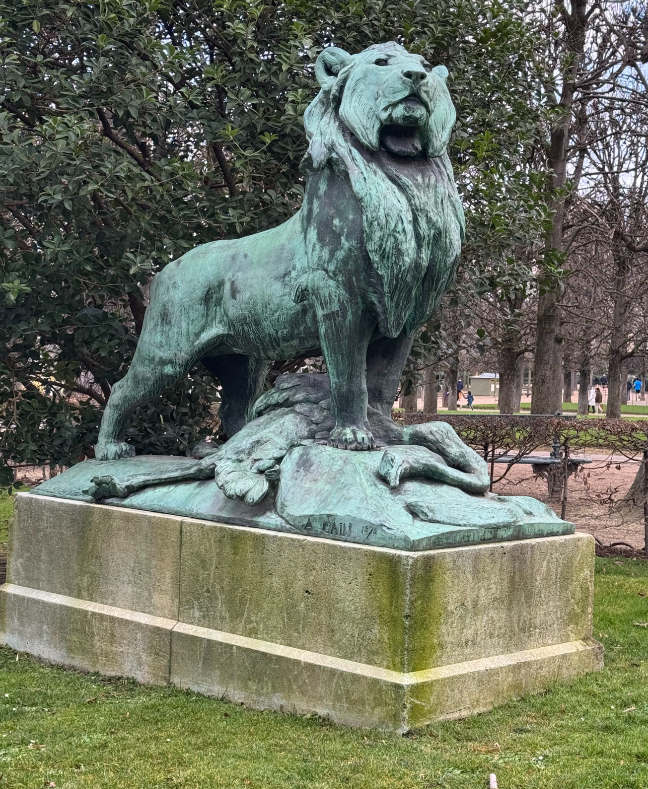
The gardens are also full of statues featuring animals - particularly lions; there are always lions. One statue was of a lion that had just killed an ostrich, which struck me as odd. The sculptor Auguste Cain made it in 1870. Cain specialised in statues of what the French thought of as exotic animals at the time. This one is entitled "Le Lion de Nubie et sa Proie" (The Nubian Lion and its Prey) - a Barbary lion, one of those which lived in the mountains in the Maghreb region in North Africa. Those lions are now extinct, the last one having been shot in the Moroccan High Atlas mountains in 1942. The ostriches from the Maghreb region also became extinct, but they have been reintroduced since the 1990s, with some success. The lions have not been reintroduced; there are debates about whether their descendants in various zoos scattered around the world are 'pure bred' Barbary lions, or whether they have mixed with other, sub-Saharan lions. In any case, the chances of conflicts with people if the lions are reintroduced have thus far been considered to be too high. Indeed.
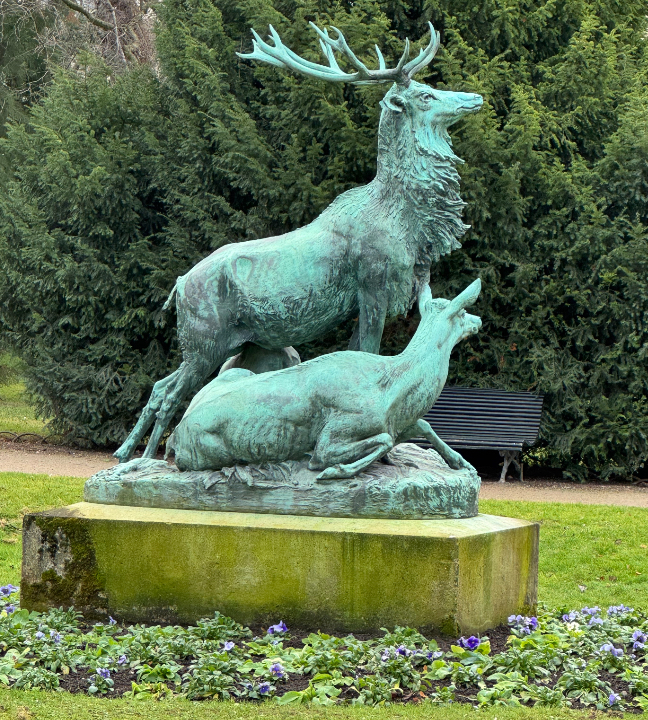
Behind the lion, there is a statue of a group of deer, "La Harde de Cerfs Écoutant le Rapproche" (Herd of Deer Listening to the Approach) sculpted by Arthur Jacques Le Duc. That one was placed in Luxembourg Gardens in 1891, quite near the lion with the dead ostrich, more than 20 years after the lion was placed there. Perhaps the idea was that they should be looking nervously towards the lion?
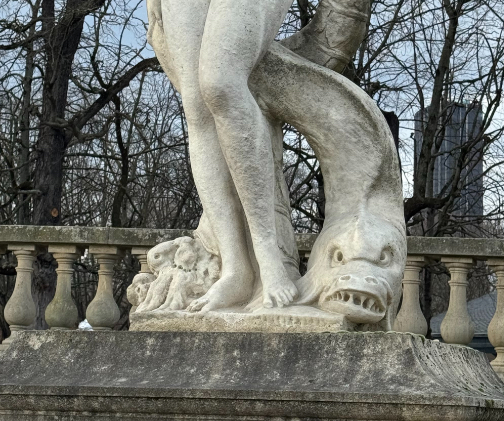
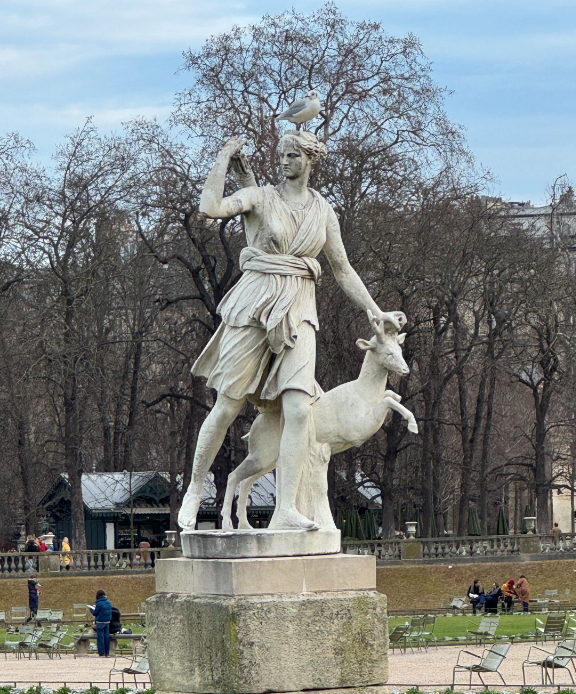
Near the Grand Basin is a statue of Venus with some kind of angry-looking dolphin with teeth. Having grown up with dolphins, it looked nothing like a dolphin to me, but I suppose it was supposed to be a bit mythical, like Venus. Further on, there is a statue of Diana the Hunter with a young deer: she was not standing naked and looking alluring, but fully dressed and entirely in possession of her faculties, it seemed to me. The deer was also a realistic one. A very much alive seagull was perched on Diana's head when I visited.
Paris-London-Cambridge - microbes, seagulls, more pigeons, cormorants, coots, swans, eagles and falcons
We left Paris on the Eurostar bound for London, which warned us not to bring any meat products with us, including ham sandwiches. The UK was banning imported meat products of any kind just now. The message did not explain why, though I knew the reason: it is an attempt to prevent the spread of foot and mouth disease (FMD) and African Swine Fever (ASF), from getting to the UK. ASF has appeared in wild boar in various parts of the European Union, including Italy, Germany and Spain, though not France as yet. This attempt to get microbes to respect borders continues.
We spent a couple of hours in London with friends and then continued to Cambridge, our final destination, where there are also a lot of seagulls, as well as pigeons, coots and swans.
The pigeons in Cambridge seem to move in large flocks and spook easily. A colleague suggested the reason is the reintroduction of Peregrine falcons, which have begun breeding in Cambridge city centre. The pigeons are prey for the falcons. Apparently, there are also red kites and white-tailed eagles in the area these days, that have successfully been reintroduced to nearby Norfolk. I don't suppose anyone asked the pigeons about these rewilding programs.
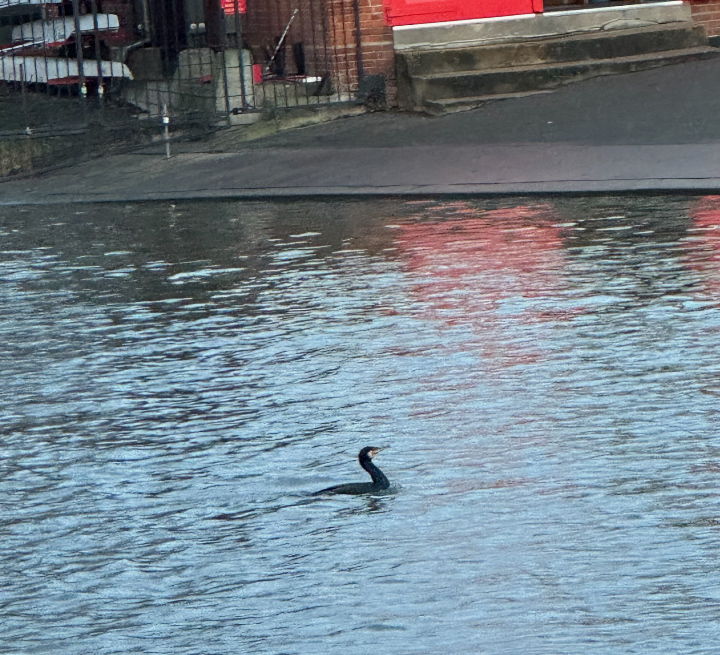
The River Cam is alive with water birds, more than I remember in the past, I think. The usual swans and ducks, but also coots and cormorants, and an occasional crane and grebe. And the pigeons. Always the pigeons.